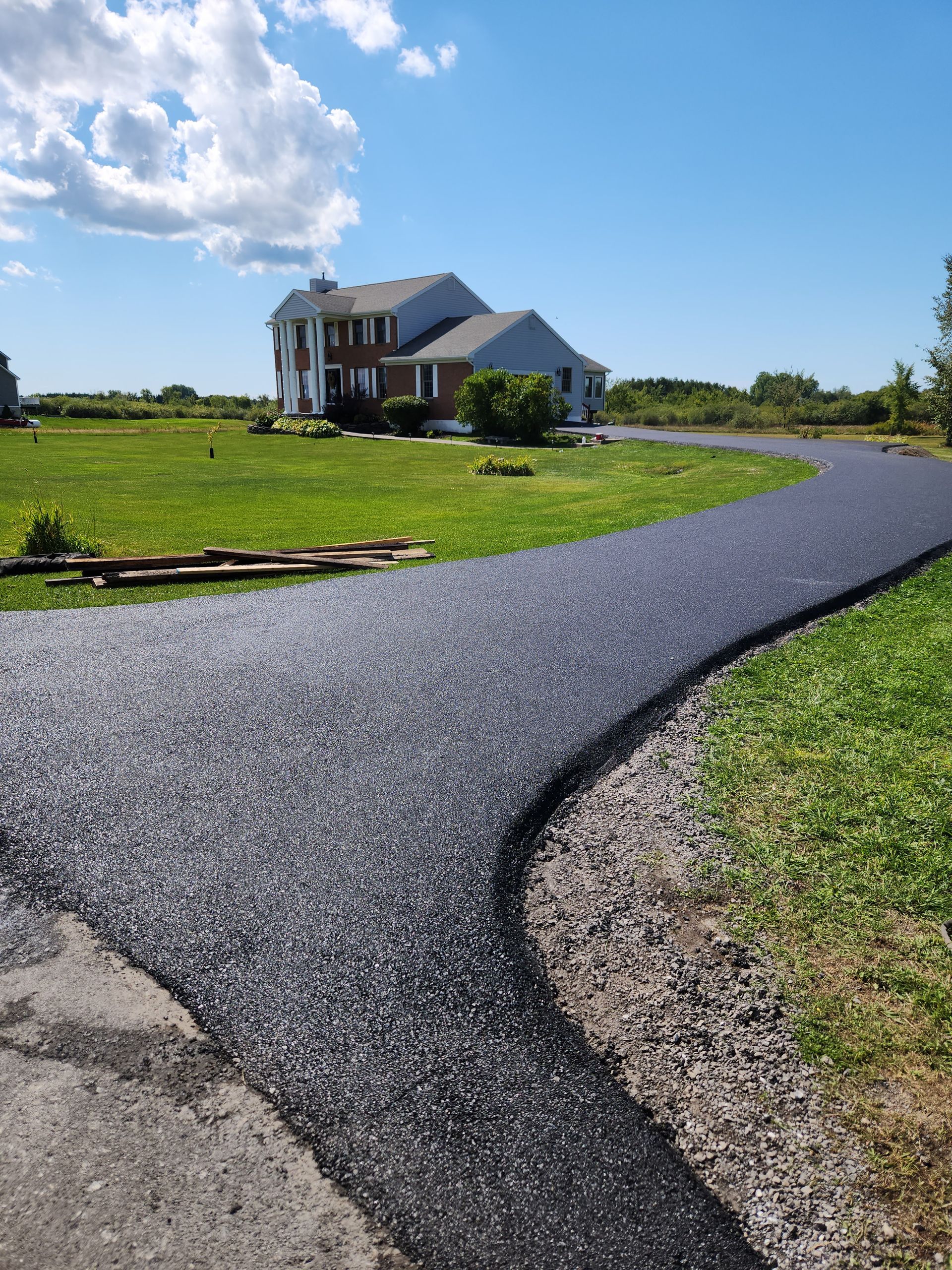
Worn Pavement Restored to A Smooth Surface
Asphalt Resurfacing in Watertown for driveways and parking lots showing surface wear and weathering
Burrville Paving & Excavation provides asphalt resurfacing for driveways, parking lots, private roads, and commercial paved areas where the underlying structure remains sound but the surface has deteriorated. This service addresses pavement that shows cracking, fading, rough texture, or minor surface damage without requiring complete replacement. Northern New York freeze-thaw cycles accelerate surface wear, making resurfacing a practical option for extending pavement life when the base layer still provides adequate support.
Resurfacing involves applying a new asphalt layer over the existing pavement after proper surface preparation and grading adjustments to correct drainage issues. The existing surface is cleaned, repaired where necessary, and a fresh layer is compacted on top, creating a smooth, durable finish. Adjustments to grade during this process help prevent water pooling that contributes to premature deterioration in northern climates.
Schedule a pavement evaluation to determine if your asphalt surfaces are suitable candidates for resurfacing in Watertown, Clayton, Fort Drum, and throughout Jefferson County and the North Country.
How A New Asphalt Layer Extends Pavement Life
The resurfacing process begins with surface preparation that removes loose material, fills minor depressions, and ensures the existing pavement is structurally stable enough to support a new layer. A tack coat is applied to bond the new asphalt to the old surface, then fresh hot mix asphalt is spread and compacted to specification. This approach works when the foundation and base layers remain intact but the surface has aged beyond effective repair through sealcoating or patching alone.
After resurfacing is complete, you notice a visibly darker, uniform surface free of the cracks and rough spots that characterized the old pavement. The driveway or parking lot handles vehicle traffic smoothly without the jarring ride caused by surface deterioration. Proper drainage corrections mean water flows off the pavement rather than settling into low areas where freeze-thaw damage begins.
Resurfacing does not address underlying base failures or significant structural problems such as extensive heaving or deep subsurface voids. Those conditions require excavation and rebuilding. Resurfacing extends pavement lifespan when applied to surfaces with solid foundations but worn-out top layers, typically adding years of service at a fraction of replacement cost.
Questions Property Owners Ask About Resurfacing
Property owners considering asphalt resurfacing often want to understand how the process works and what conditions make it the right choice.
How do you determine if a pavement needs resurfacing or full replacement?
The decision depends on whether the base layer and foundation remain structurally sound. If the pavement shows only surface cracking and wear without deep base failure or extensive heaving, resurfacing provides a cost-effective solution that restores function and appearance.
What preparation happens before the new asphalt layer goes down?
The existing surface is cleaned thoroughly, potholes and damaged areas are patched, and grading adjustments are made to correct drainage problems. A tack coat is applied to ensure the new layer bonds properly to the old pavement, creating a unified surface rather than separate layers that can delaminate.
How long does resurfaced asphalt last in the North Country?
Resurfaced pavement typically lasts ten to fifteen years when the underlying structure is solid and proper maintenance like sealcoating is performed. Northern New York conditions require attention to drainage and seasonal care to maximize lifespan.
Why does resurfacing cost less than full replacement?
Resurfacing reuses the existing base and foundation layers, eliminating excavation, hauling, and complete reconstruction costs. You pay only for surface preparation and the new top layer, which significantly reduces both material and labor expenses.
When is the best time to resurface asphalt pavement?
Resurfacing works best during warmer months when asphalt can be properly heated, applied, and compacted. Scheduling before winter allows the new surface to cure and prepares the pavement to handle freeze-thaw cycles without the vulnerabilities of aged, cracked asphalt.
Burrville Paving & Excavation evaluates your pavement condition to determine whether resurfacing provides the durability and performance you need. Contact us to arrange an on-site assessment and receive a detailed resurfacing estimate based on your specific pavement conditions.