
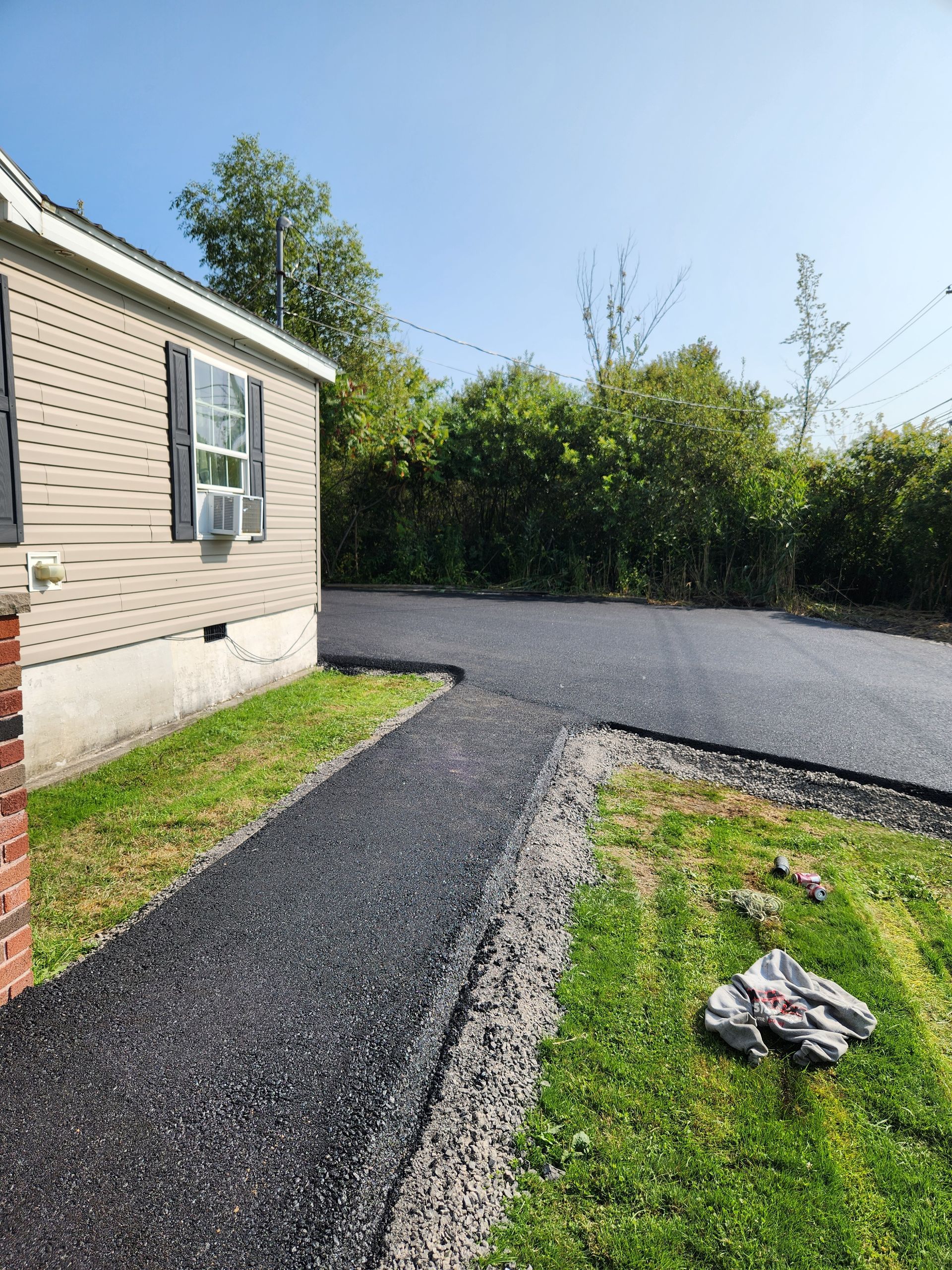
Safe, Durable Surfaces for Daily Foot Traffic
Sidewalk & Walkway Paving in Watertown for properties requiring clear pedestrian routes and accessible outdoor connections
Burrville Paving & Excavation installs sidewalks and walkways that connect driveways, entrances, patios, and outdoor spaces across residential and commercial properties. These paved surfaces provide smooth, stable routes for foot traffic while withstanding the freeze-thaw cycles, snow loads, and ice formation common in northern New York winters. Proper grading during installation prevents water accumulation that leads to surface cracking and ice buildup during cold months.
The paving process begins with excavation to proper depth, followed by compacted base material that resists settling and shifting. Drainage planning ensures water moves away from walking surfaces rather than pooling where pedestrians step. Material selection accounts for slip resistance and durability under seasonal temperature swings that range from subzero winters to humid summers.
Request a walkway paving estimate that includes grading and drainage analysis for your property layout in Watertown, Clayton, Mannsville, and throughout Jefferson County and the North Country.
What Proper Walkway Installation Requires
Walkway paving involves precise grading to direct water away from the surface and adjacent structures, preventing the pooling that accelerates pavement deterioration in freeze-thaw conditions. Base preparation includes compacted layers that resist the ground movement caused by frost heave, which occurs when moisture in soil freezes and expands beneath paved surfaces.
Once paving completes, you'll notice level transitions between the walkway and existing surfaces, eliminating tripping hazards at doorways and driveway connections. Water no longer collects in low spots where ice forms during winter months. The finished surface provides stable footing year-round while improving curb appeal through clean lines and consistent appearance.
Walkway installations include edge restraints that prevent lateral spreading and maintain defined borders over time. The surface finish can be adjusted for texture, balancing smoothness for mobility equipment with enough grip for wet or icy conditions. Material thickness and base depth are determined by anticipated foot traffic levels and the presence of maintenance equipment like snow blowers.
Questions Before Starting Your Project
Property owners in Watertown and throughout the North Country often ask about timeline, material choices, and how installations hold up through seasonal changes.
How does proper grading prevent ice buildup on walkways?
Grading creates a slope of at least two percent, moving water off the surface before it freezes. In Watertown winters, this drainage prevents the ice sheets that form when water sits on level pavement.
What base preparation is needed for northern New York freeze-thaw cycles?
Compacted aggregate base extends below the frost line, typically 42 inches in this region, to prevent heaving. This depth keeps the pavement stable when ground moisture freezes and expands.
When should walkway paving be scheduled?
Spring through fall offers optimal installation conditions once ground thaws completely. Surface materials cure properly in temperatures above 50 degrees.
What width works best for residential walkways?
Most residential routes require 36 to 48 inches for comfortable single-file traffic and accommodation of mobility devices. Commercial properties often need 60 inches or wider for side-by-side passage.
How do paved walkways compare to other surface materials for maintenance?
Paved surfaces resist the rutting and displacement common with gravel, require no seasonal replenishing, and allow efficient snow removal without damaging the walking surface.
Burrville Paving & Excavation provides walkway installations designed for the weather patterns and ground conditions specific to northern New York properties. Schedule a site evaluation to determine grading requirements and surface specifications for your pedestrian routes.