
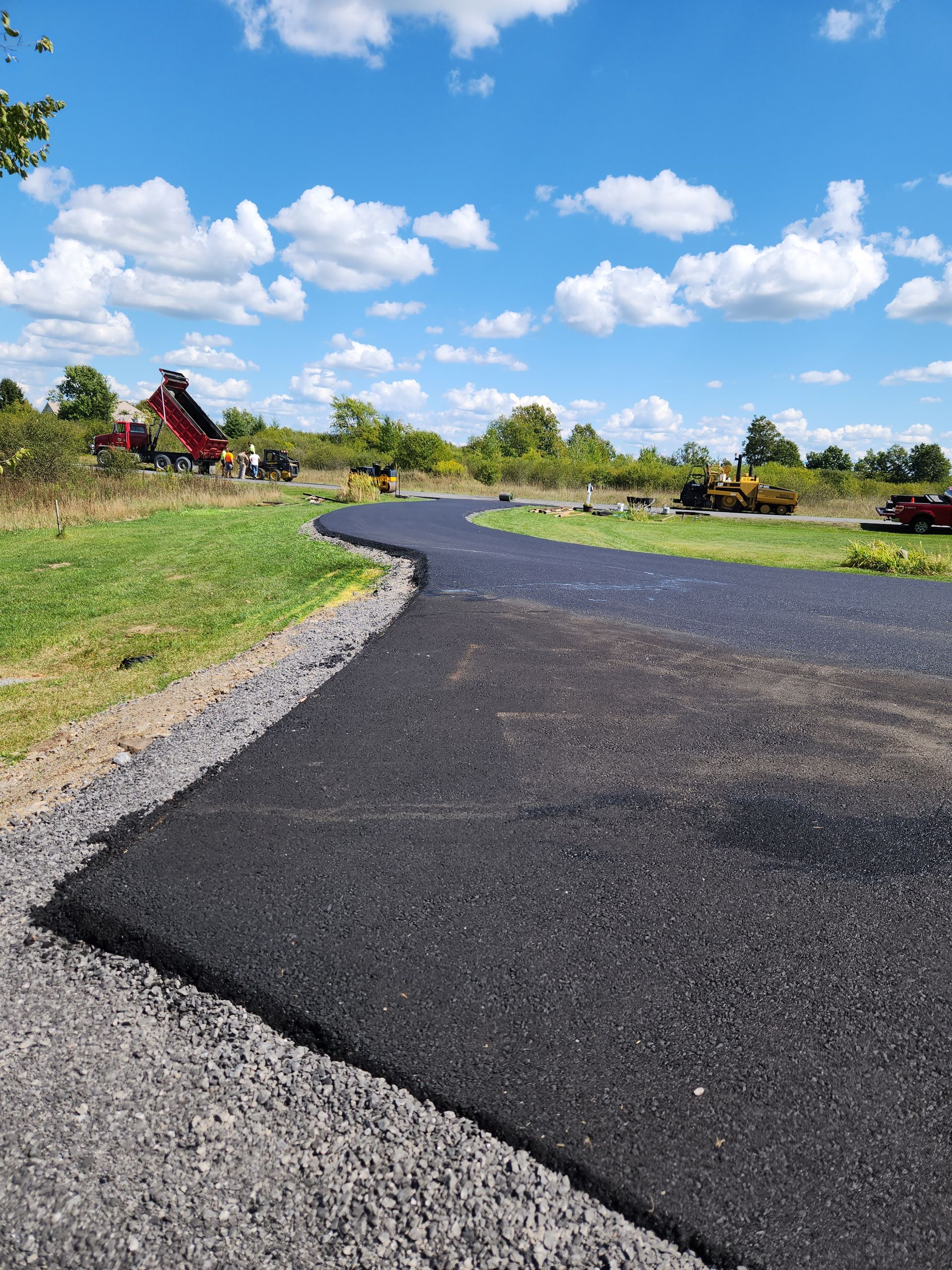
Parking Areas Built for Business Traffic
Commercial Paving Services in Watertown for parking lots and access roads that handle daily vehicle loads
Parking lots that develop potholes and drainage failures disrupt business operations and create liability concerns during winter months when ice forms in uneven areas. Burrville Paving & Excavation installs commercial paving for businesses, private developments, and properties requiring loading areas and access roads throughout Watertown, Carthage, Mannsville, and across Jefferson County and the North Country. Commercial installations require thicker base sections than residential driveways because delivery trucks and customer traffic concentrate weight differently than passenger vehicles, and surface failures in high-traffic zones appear faster without proper structural design.
Commercial paving projects address deteriorating parking areas, access routes that need capacity expansion, and surfaces where drainage problems cause seasonal flooding. Installation involves coordinating work schedules to keep portions of your property accessible, staging equipment to minimize disruption, and sequencing paving phases so operations continue. Drainage planning prevents water from pooling in parking stalls or travel lanes, and proper grading directs runoff toward collection points rather than adjacent properties.
Arrange a site consultation to evaluate traffic patterns and establish paving phases that maintain business access throughout the project.
How Commercial Paving Addresses High-Traffic Demands
Commercial surfaces require base depths calculated for expected axle loads, with compaction standards that prevent rutting in turning areas where vehicles concentrate stress. Asphalt thickness and mix design account for whether the surface will handle occasional delivery trucks or daily heavy equipment traffic. Proper installation includes defined edges that prevent pavement from spreading under load and drainage structures that manage stormwater without eroding base materials.
Once completed, you'll see clearly marked travel lanes, parking areas that drain without standing water, and surfaces that remain smooth under turning movements. Loading zones maintain level grades that simplify equipment maneuvering, and access roads provide defined routes that separate delivery traffic from customer parking. The pavement stays intact through snowplow operations that would damage improperly constructed surfaces.
Commercial projects include consideration of future expansion areas, coordination with striping contractors for marking layouts, and options for phased construction that spreads costs across budget cycles. Work schedules account for your peak business hours, with paving operations timed to minimize customer inconvenience and maintain safety throughout active construction zones.
Answers to Frequent Service Questions
Commercial property owners typically want to understand project timelines, how work affects daily operations, and what structural differences separate commercial paving from residential installations.
What makes commercial paving different from residential work?
Commercial surfaces require thicker base sections and asphalt layers designed for heavier vehicles and concentrated traffic patterns. A residential driveway may use four inches of total pavement structure, while commercial parking lots often need eight to twelve inches depending on soil conditions and expected loads.
How is scheduling managed to minimize business disruption?
Projects are phased to keep portions of parking areas accessible, with paving work concentrated during off-peak hours when possible. Staging plans establish temporary access routes and designate areas for customer parking throughout construction, ensuring business operations continue with minimal interruption.
Why does proper drainage matter for parking lots?
Water that infiltrates pavement accelerates freeze-thaw damage and softens base materials, leading to potholes and surface failures. Grading directs runoff toward catch basins or drainage swales, preventing pooling that creates icy conditions in Watertown winters and shortens pavement life.
What factors affect commercial paving costs?
Base thickness requirements, total paved area, existing surface removal needs, and drainage infrastructure all influence project costs. Sites with poor soil conditions require more extensive base preparation, while properties needing new drainage structures involve additional excavation and material expenses.
How long before new pavement can handle full traffic loads?
Asphalt reaches functional strength within days, though full curing continues for months. Most commercial surfaces can handle traffic within twenty-four to forty-eight hours after installation, allowing businesses to resume normal operations quickly once paving is completed.
Burrville Paving & Excavation plans commercial projects around your operational needs, with detailed timelines and phasing strategies that maintain site accessibility. Contact us for a commercial paving consultation that addresses your property's traffic patterns and drainage requirements.