Access Routes That Handle Daily Use
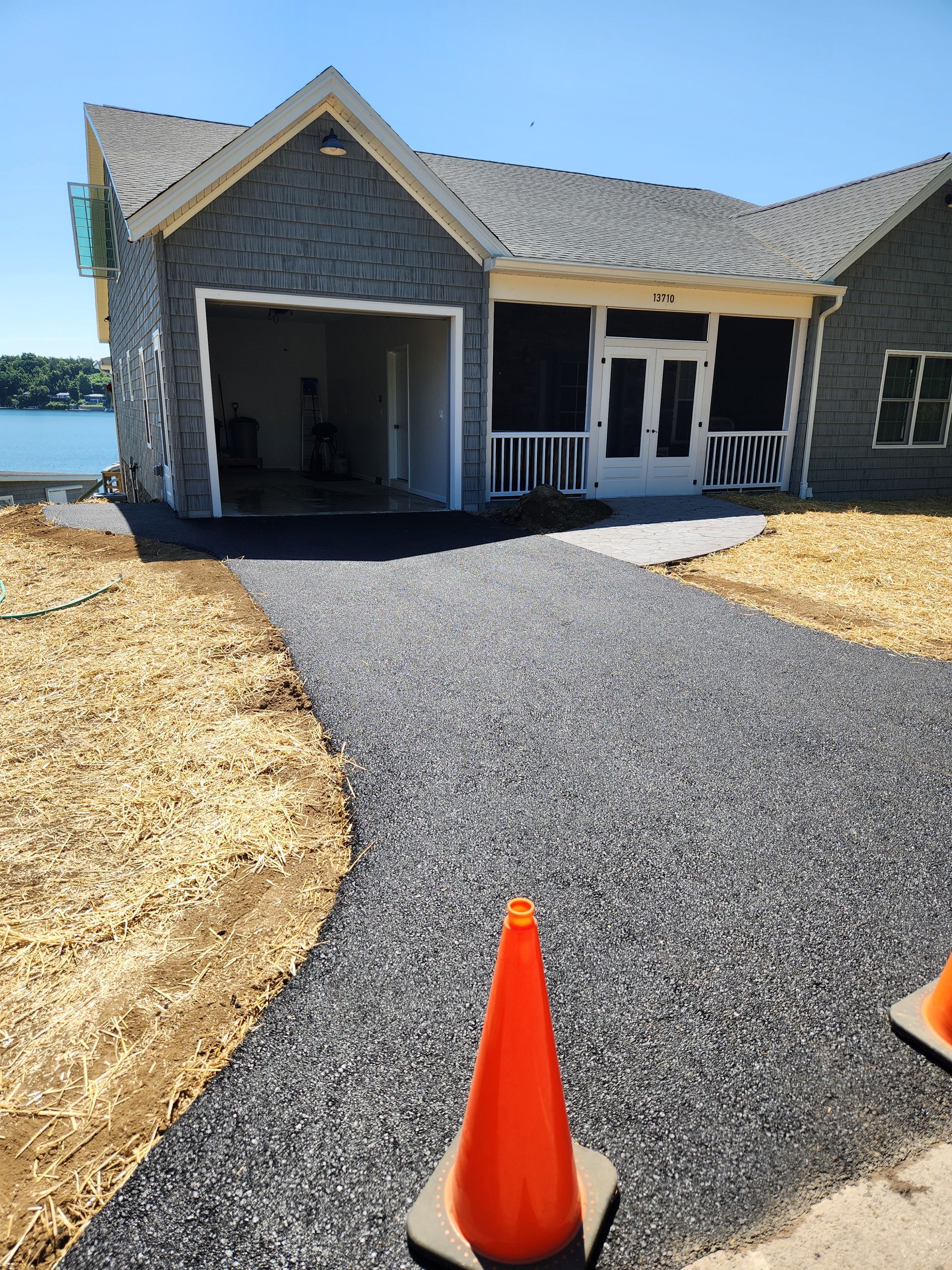
Driveway Paving in Watertown for new installations and full driveway replacements on residential properties
A crumbling driveway with potholes and drainage problems affects more than appearance—it complicates snow removal, damages vehicle suspensions, and creates accessibility issues during wet weather. Burrville Paving & Excavation completes driveway paving projects for homeowners needing new installations or full replacements, working throughout Watertown, Clayton, Mannsville, and throughout Jefferson County and the North Country. Driveway projects begin with layout planning that accounts for turning radius needs and slope requirements, followed by excavation that removes unstable materials and establishes grades directing water away from structures before any pavement goes down.
New driveway installations provide defined access where vehicles currently cross lawn areas or navigate makeshift gravel paths, while replacement projects address surfaces that have deteriorated beyond economical repair. Grading work eliminates low spots where water collects, and base preparation creates stable foundations that resist the ground movement northern New York experiences through seasonal freeze-thaw cycles. Asphalt driveways deliver smooth finishes suited for areas near homes, while stone options extend access routes across larger rural properties where cost considerations favor aggregate surfaces.
Schedule a driveway estimate that includes site evaluation and layout options customized for your property's access needs.
What Proper Driveway Installation Requires
Driveway installations require establishing grades that prevent water from flowing toward foundations or garage floors, particularly critical on properties with minimal natural slope. Excavation depth depends on existing soil stability and whether the driveway needs to match elevation at garage entrances or connect to roadway heights. Compacted base layers distribute vehicle weight across wider areas, preventing the rutting and settling that occur when pavement rests directly on native soil.
Once finished, you'll drive on smooth surfaces that eliminate jarring over uneven spots, navigate turns without wheels dropping off defined edges, and avoid mud tracking into garages during wet seasons. Water flows off the driveway toward drainage areas rather than pooling near building foundations, and snowplows clear the surface cleanly without catching on crumbled edges or loose material. The driveway provides year-round access that remains functional through weather conditions that leave unpaved routes impassable.
Driveway projects can include expansion areas for additional parking, connections to detached garage buildings, or turnaround spaces that eliminate backing onto roads. Layout planning addresses sight distance concerns where driveways meet public roads, and grading accommodates existing utility locations that constrain excavation depth in specific areas.
What Property Owners Usually Ask
Driveway decisions involve understanding how different materials perform, what site conditions affect installation approaches, and how layout choices impact long-term functionality.
What width works for residential driveways?
Single-lane driveways typically run ten to twelve feet wide, allowing comfortable passage for standard vehicles. Properties needing side-by-side parking or frequent guest access benefit from wider sections near homes, while rural driveways often maintain narrower widths to reduce paving costs over longer distances.
How does slope affect driveway design?
Steep slopes require careful grading to prevent water from rushing down the surface during rainstorms, while excessive grades create traction problems during winter. Most driveways function best with slopes between two and ten percent, steep enough for drainage but manageable for vehicles in icy conditions common throughout Watertown winters.
Why do some driveways develop cracks quickly?
Inadequate base preparation causes most premature cracking. Thin base layers, poor compaction, or improper drainage allow ground movement that stresses pavement beyond its capacity. Properly constructed driveways with sufficient base depth and correct grading resist cracking for years.
What's included in driveway replacement projects?
Full replacement involves removing existing pavement, addressing drainage and base issues that caused the original failure, and installing new pavement with proper structural design. This approach costs more than surface repairs but solves underlying problems that would continue damaging new pavement laid over inadequate foundations.
Can driveways be expanded after initial installation?
Asphalt driveways can be widened or extended by adding sections that tie into existing pavement, though matching aged asphalt color perfectly isn't possible. Planning expansion areas during initial installation allows for future additions without compromising drainage or creating awkward transitions.
Burrville Paving & Excavation customizes driveway layouts based on your property's topography, soil conditions, and how you use access routes throughout the year. Contact us to discuss driveway options that address your specific site challenges and access requirements.