Long-Lasting Stone Driveways Designed for Strength and Drainage
Stone Driveways in Watertown for residential properties, camps, and farms needing cost-effective access routes
Watertown and North Country properties with long access routes or seasonal camps often find asphalt costs prohibitive when driveways extend hundreds of feet from main roads. Stone driveways provide stable, well-drained surfaces that handle vehicle traffic at lower installation costs, particularly suited for rural lots, farm properties, and camps where gravel performance meets access needs without requiring pavement. Burrville Paving & Excavation installs stone driveways with proper grading and base preparation that prevent the washout and rutting problems associated with gravel simply dumped without subsurface work.
Stone installations address muddy access routes that become impassable during spring thaw, undefined driving areas where vehicles track across property randomly, and erosion problems where runoff carves channels through loose material. The process involves establishing grades that direct water off the driving surface, excavating soft spots where vehicles have created ruts, and placing graded stone in compacted layers that create stable driving lanes. Material selection matters—angular stone interlocks to resist displacement, while rounded gravel shifts under tires and requires frequent regrading.
Request a stone driveway consultation to evaluate your property's drainage patterns and determine appropriate base preparation for lasting stability in Watertown, Adams, Carthage, and throughout Jefferson County and the North Country.
The Difference Between Proper Stone Installation and Gravel Spreading
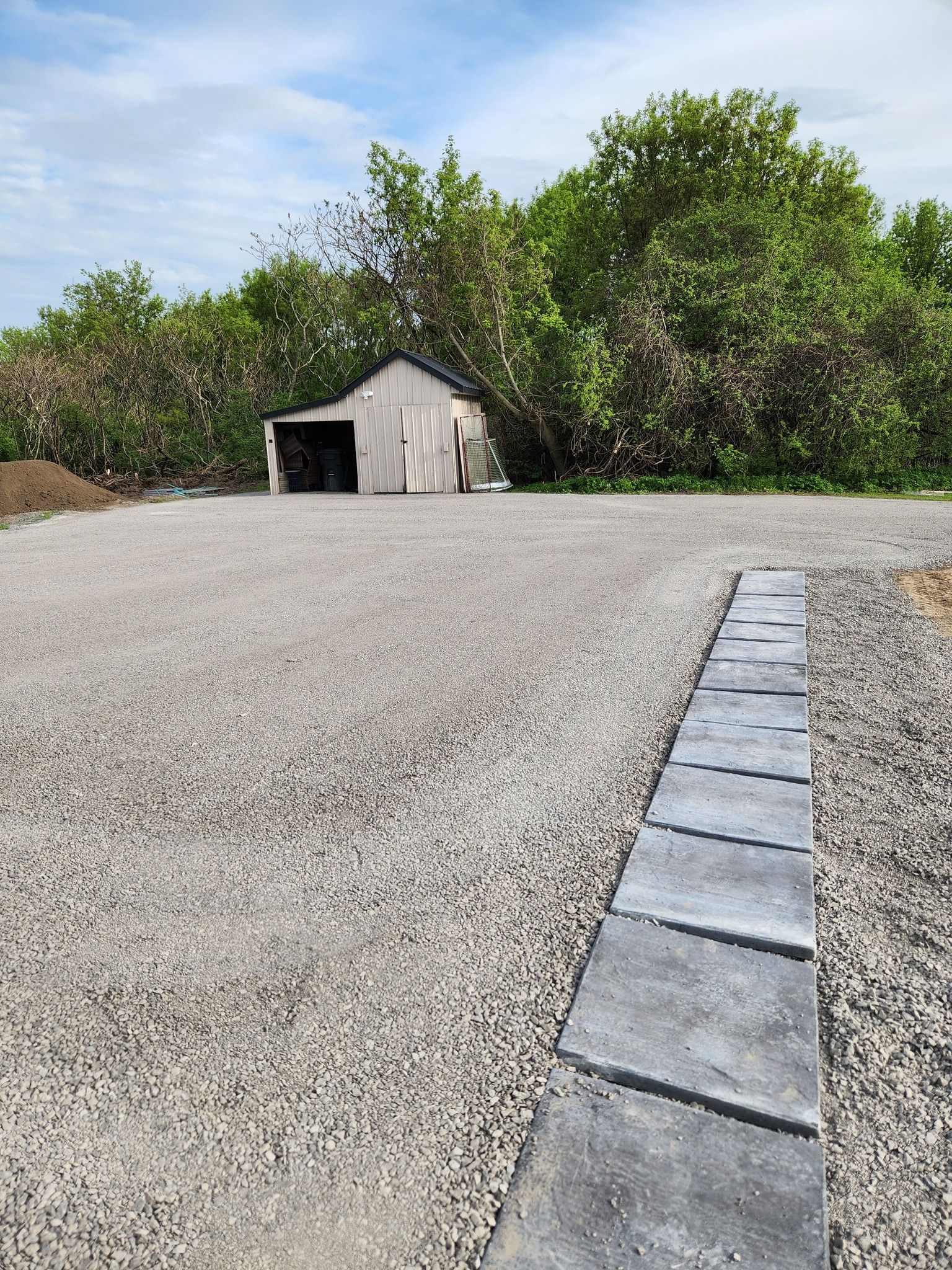
Stone driveway installation begins with grading that creates crowned or sloped surfaces directing water toward edges rather than allowing it to flow down the center line where vehicle tires concentrate. Base preparation may include geotextile fabric in soft soil areas to prevent stone from sinking into unstable ground, particularly important in northern New York where spring thaw softens subsurface conditions. Stone is placed in lifts and compacted, with larger base stone providing structural foundation and smaller surface stone creating the driving layer.
After installation, you'll navigate driveways that remain passable through wet weather without vehicles sinking into mud, with defined edges that keep stone where it belongs rather than spreading into lawn areas. Water drains off the surface and into surrounding soil without pooling or creating ice sheets during winter freezes. Properly installed stone driveways eliminate the constant maintenance cycle of filling ruts and redistributing material that characterizes gravel routes laid without adequate preparation.
Stone driveways work economically for extended rural access roads, seasonal properties where year-round smoothness isn't required, and farms needing multiple vehicle routes where asphalt costs become impractical. Maintenance involves occasional regrading as surface stone gradually displaces under traffic, and periodic material addition to replace stone that migrates off the driving surface over time.
Questions Before Starting Your Project
Stone driveway projects involve understanding how material choices and preparation methods affect long-term performance, particularly in northern climates with challenging seasonal conditions.
How deep does stone need to be for stable driveways?
Most stone driveways use six to eight inches of total stone depth, with larger base stone underneath and smaller driving surface stone on top. Soft soil conditions or heavy vehicle traffic may require additional depth to prevent rutting and maintain stable surfaces.
What type of stone works best for driveways?
Crushed angular stone compacts tightly and resists displacement better than rounded river gravel. Stone gradation matters—a mix of sizes allows smaller particles to fill voids between larger stones, creating denser, more stable surfaces than uniform-sized material.
Why do some stone driveways develop deep ruts?
Inadequate base preparation and insufficient stone depth cause rutting. When stone is spread over soft soil without grading or compaction, vehicle weight pushes stone into the ground rather than distributing loads across a stable base. Properly prepared stone driveways resist rutting even during spring thaw when ground conditions soften.
How is drainage managed on stone driveways?
Grading creates cross-slope or crown that moves water off the driving surface toward edges, preventing water from flowing down the center and eroding channels. Stone's natural permeability allows water to infiltrate rather than pooling on the surface, reducing ice formation in Watertown winters compared to impermeable pavement.
Can stone driveways be converted to asphalt later?
Stone driveways provide excellent bases for future asphalt installation if properly graded and compacted initially. Converting requires evaluating stone depth and stability, possibly adding material to meet asphalt base requirements, then paving over the prepared stone surface.
Burrville Paving & Excavation designs stone driveway installations based on your property's soil conditions, length requirements, and vehicle traffic patterns to create stable access routes that perform reliably. Arrange an estimate to discuss stone options and grading approaches suited for your rural property or camp access needs.