Property Made Accessible for Development
Land Clearing in Watertown for wooded lots, overgrown parcels, and properties requiring brush removal before construction or improvement projects begin
Overgrown vegetation, fallen trees, and dense brush prevent access to building sites and hide subsurface conditions that affect construction planning. Land clearing removes this material to expose the actual ground surface, reveal elevation changes, and allow equipment access for excavation and grading work. Properties throughout Watertown, Clayton, Fort Drum, and across Jefferson County and the North Country often include second-growth hardwoods, tangled undergrowth, and stumps from previous clearing that must be addressed before development proceeds.
Burrville Paving & Excavation operates clearing equipment that cuts standing vegetation, grinds stumps below grade, and removes debris without damaging desirable trees or existing structures. The clearing process separates usable material like topsoil from woody debris requiring disposal. Safe operation includes identifying property boundaries, locating overhead utilities, and working around wetlands or steep slopes where equipment stability matters.
Request a land clearing estimate based on current vegetation density and your intended property use.
What You Notice Once Clearing Is Finished
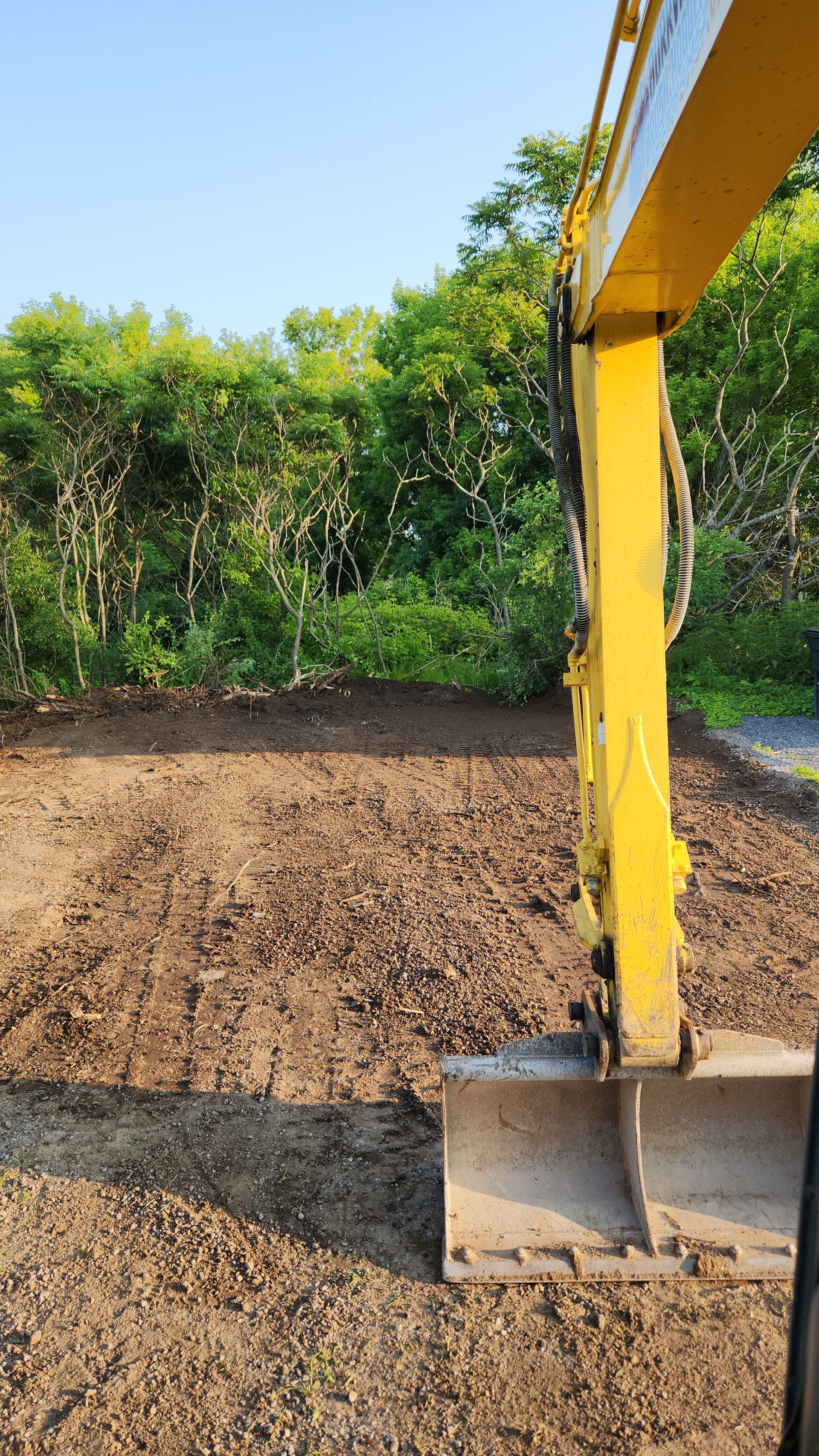
Cleared land becomes accessible to survey crews, excavation equipment, and material deliveries that couldn't reach the site through dense vegetation. Property boundaries become visible, making it possible to verify setback distances and building envelope dimensions before foundations are located. The exposed ground surface reveals slopes, drainage patterns, rock outcrops, and wet areas that affect where buildings can be placed and how much grading work will be required.
Once clearing completes, construction vehicles can navigate the site without damaging equipment on hidden stumps or getting stuck in concealed depressions. Topsoil remains in place rather than being mixed with woody debris that prevents proper compaction. Stump grinding eliminates the voids that form as roots decay, which would otherwise cause settling beneath driveways or building pads years after construction finishes. Cleared sight lines improve safety during subsequent excavation and construction phases.
Land clearing often coordinates with selective tree removal, where specific specimens are preserved for landscaping while surrounding brush is eliminated. Debris disposal follows local regulations regarding burn permits or hauling to approved facilities. Some cleared material can be chipped for erosion control mulch used during final grading. Rural properties sometimes require clearing of access roads before lot development begins, particularly on parcels without existing driveways or turnaround areas for construction traffic.
Questions Before Starting Your Project
Property owners planning development or improvements typically ask about disposal methods, equipment impact, and how clearing integrates with other site work.
What vegetation requires removal before construction can begin?
Any growth within the building footprint and equipment access routes must be cleared. Tree roots extending under planned foundations need grinding to prevent decay voids. Brush along drainage routes should be removed to allow proper grading.
How are stumps handled during land clearing?
Stump grinding removes the root crown to 12 inches below finished grade, eliminating future settling. Grinding produces wood chips that can be spread for erosion control or hauled away depending on project needs.
What seasonal timing works best for clearing in Watertown?
Late fall through early spring allows access when ground is frozen, preventing rutting from equipment. Frozen conditions also make woody debris easier to handle and transport off-site.
How does clearing affect drainage on previously wooded lots?
Removing vegetation increases runoff velocity and volume because tree canopies and root systems no longer intercept and absorb precipitation. Grading plans must account for this change by establishing proper drainage channels and outlets.
What site conditions make land clearing more complex?
Steep slopes limit equipment access and require specialized clearing methods. Wetlands or stream buffers impose regulatory restrictions on vegetation removal. Rocky terrain makes stump extraction difficult and may require blasting for full removal.
Burrville Paving & Excavation clears residential, commercial, and rural properties preparing for construction, paving, or property improvement projects. Schedule a property visit to assess vegetation density, identify site constraints, and coordinate clearing with your development timeline.