Surfaces That Support What You Build
Grading in Watertown for water pooling, uneven driveways, and unstable construction pads
Surface water moves where the ground tells it to go, and without the right slope, it moves toward foundations, driveways, and low spots where it damages what you've invested in. Burrville Paving & Excavation performs grading work across Watertown, Clayton, Adams, and throughout Jefferson County and the North Country where uneven terrain, sloped properties, and poor drainage patterns require deliberate reshaping to prevent ongoing erosion and structural problems. The goal is to create surfaces that direct water away from structures, establish stable construction pads, and prepare driveways and landscaping areas for long-term use without settling or washing out.
Grading reshapes soil elevation and slope using equipment designed to cut high spots, fill depressions, and establish controlled drainage paths that prevent water from pooling or eroding soil around structures. On sloped properties and rural land, grading addresses natural contours that send runoff toward buildings or create unstable zones where paving or construction would fail without a stable, compacted base.
Schedule a site evaluation to identify drainage concerns and discuss grading requirements for your property layout.
What Proper Grading Requires
Effective grading starts with analyzing existing drainage flow, identifying where water currently collects, and determining the slope adjustments needed to redirect it safely away from foundations, driveways, and landscaping areas. Equipment precision matters because even small elevation errors can reverse intended drainage direction or create new low points where water accumulates instead of draining.
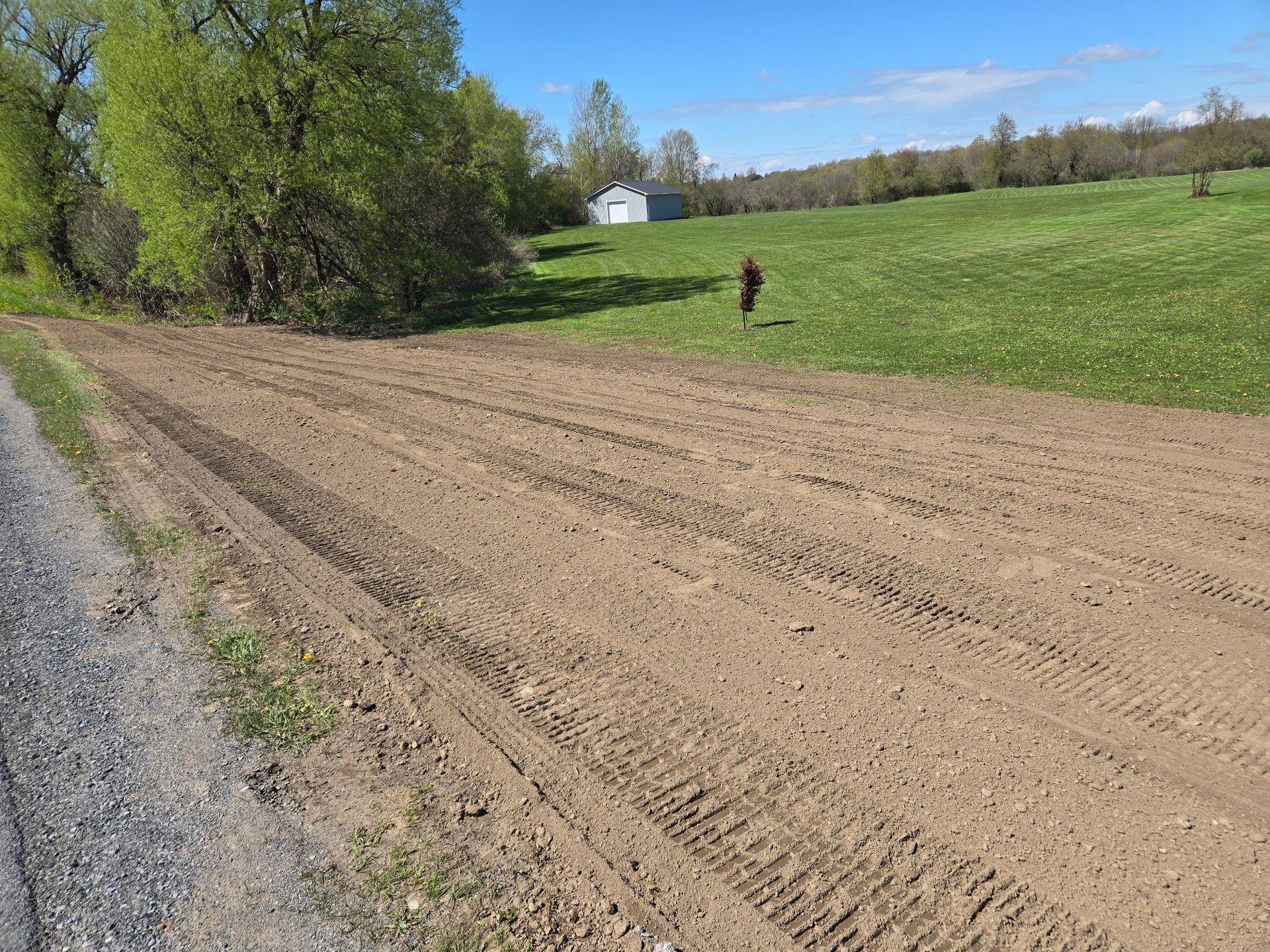
After grading work is completed, you notice water flowing away from structures during rain events rather than pooling near foundations or driveways, driveways that sit level without dips where water collects, and construction pads that remain stable under weight without settling unevenly. Properly graded surfaces also resist erosion because water moves across them at controlled speeds rather than cutting channels through loose soil.
Grading for driveways involves establishing a crown or slope that sheds water to the edges, while construction pad grading creates a level, compacted base that won't shift under building loads. Landscaping grading may include swales or berms that channel runoff toward drainage areas, and on larger rural properties, grading often ties into broader erosion control plans that protect soil during heavy weather.
Questions Before Starting Your Project
Property owners working with grading contractors typically want to understand how the process affects existing site conditions and what results to expect once work is finished.
What happens during a grading project for drainage improvement?
The existing surface is reshaped to establish slopes that direct water away from structures, low spots are filled and compacted, and high areas are cut down to create consistent drainage paths that prevent pooling and erosion.
How does grading support paving performance over time?
Paving materials need a stable, well-draining base to prevent cracking and settling, and grading creates that foundation by eliminating soft spots, ensuring proper compaction, and establishing slopes that keep water from undermining the pavement structure.
When should grading be done on sloped or uneven properties?
Grading should be completed before construction, paving, or major landscaping work begins, and it's often necessary after heavy erosion events or when existing drainage patterns cause water damage around structures.
What equipment is used for precise grading work?
Grading typically involves laser-guided or GPS-equipped machines that can achieve exact elevations across large areas, along with compaction equipment that stabilizes reshaped soil to prevent future settling.
How does grading in Watertown address rural property challenges?
Rural properties often feature natural slopes, varied soil types, and longer drainage runs that require careful planning to prevent erosion while maintaining access routes and usable land areas.
Burrville Paving & Excavation evaluates site-specific drainage patterns and terrain conditions to develop grading solutions that protect structures and prepare surfaces for intended use. Request a consultation to review grading options and receive a project estimate based on your property layout.