Underground Pathways Dug Right the First Time
Utility Trenching in Watertown for water lines, drainage systems, electrical conduit, and site development projects
Buried utilities fail when trenches are dug too shallow, backfilled poorly, or routed without considering long-term ground movement and surface loads. Trench excavation for water, drainage, electrical, and other underground systems requires accurate depth control, proper bedding material, and layout planning that accounts for future access and maintenance needs. Burrville Paving & Excavation handles utility trenching across residential, commercial, and rural site development projects in Watertown, Adams, Carthage, and throughout Jefferson County and the North Country, where uneven terrain and varied soil conditions require deliberate digging practices to avoid damaging existing infrastructure and ensure new utilities perform reliably for decades.
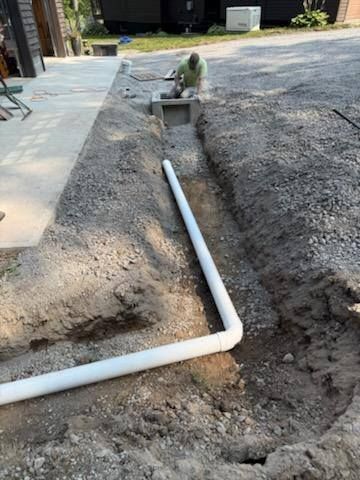
Utility trenching involves excavating narrow, controlled-depth channels that follow planned routes from connection points to endpoints, bedding pipes or conduit on stable material, and backfilling in compacted layers that prevent settling. Safe digging practices include locating existing buried lines before excavation begins and using equipment that won't crush fragile utility materials during installation.
Arrange a project planning session to discuss trench routing, depth requirements, and coordination with other site work.
How Trenching Addresses Long-Term Utility Performance
Trenching quality affects whether buried utilities stay at the correct depth, remain accessible for repairs, and avoid damage from soil movement or surface loading. Trench layout planning determines whether future maintenance requires digging up paved surfaces or landscaping, and whether drainage lines maintain the slope needed for gravity flow without low spots where debris accumulates.
Once trenching and backfilling are complete, you see utility lines buried at depths that prevent freezing or surface damage, trench routes that avoid conflicts with driveways and structural foundations, and backfilled areas that settle evenly without creating depressions where water pools. Properly trenched drainage systems maintain consistent slope from inlet to outlet, which keeps water moving and prevents clogs caused by standing water.
Trenching depth varies by utility type and local frost line considerations, electrical conduit often requires different bedding material than water or drainage pipe, and trench width depends on the installation method and whether multiple lines share the same excavation. On rural properties with longer utility runs, trenching may involve crossing slopes or unstable soil zones that need additional stabilization to prevent trench wall collapse during excavation.
Answers to Frequent Service Questions
Customers preparing for utility installation or site development work typically ask about trenching methods, timing, and how excavation integrates with other construction phases.
What happens during utility trench excavation?
The trench route is marked and staked, existing utilities are located and marked to avoid damage, soil is excavated to the required depth and width, and the trench bottom is prepared with bedding material before utility installation begins.
How does trenching coordinate with construction and site preparation work?
Trenching is typically scheduled after rough grading establishes final elevations but before paving or final landscaping, allowing utilities to be installed without disrupting finished surfaces.
Why does trench backfill matter for surface stability?
Loose backfill settles over time and creates depressions in driveways, lawns, and paved areas, so proper trenching includes compacting backfill in layers to match the surrounding soil density and prevent future sinking.
What trenching challenges occur on uneven or sloped terrain?
Sloped sites require careful depth management to maintain utility grade while keeping trenches at safe working depths, and uneven terrain may involve stepping trenches or adding stabilization to prevent soil slumping during excavation.
How does Burrville Paving & Excavation handle safe digging on rural properties?
Rural properties often lack detailed utility maps, so trenching begins with thorough site inspection, manual probing in areas where existing lines may be present, and careful excavation near known connection points to avoid damaging water, septic, or electrical systems already in place.
Burrville Paving & Excavation plans trench routes based on site layout, soil conditions, and utility performance requirements to deliver installations that function correctly and remain accessible for future work. Request a trenching estimate and site assessment to review project-specific excavation needs.