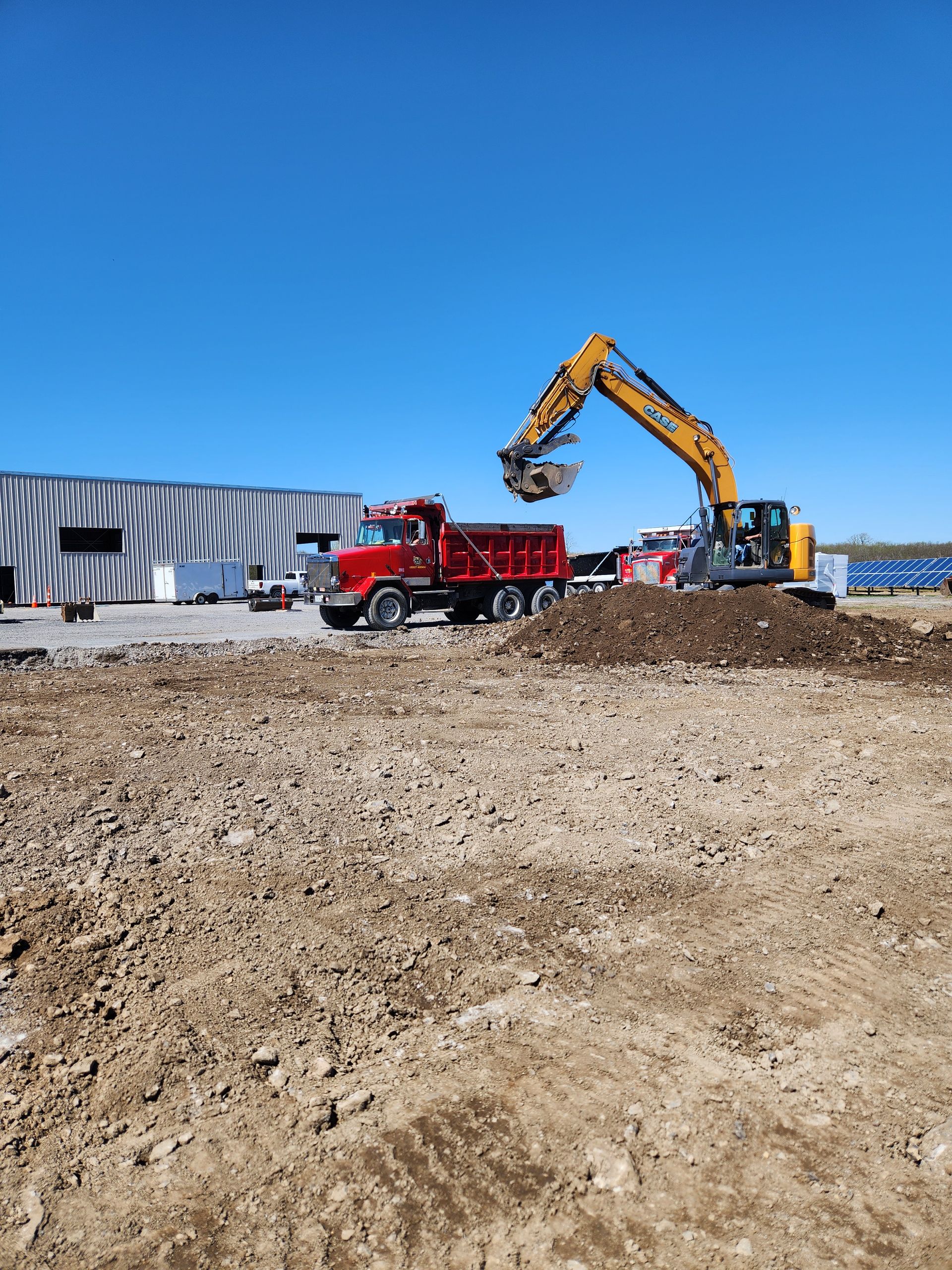
Land Ready for Building and Paving
Site Prep in Watertown for properties requiring grading, leveling, and foundation support before construction or pavement installation
Construction projects fail when foundations settle unevenly, drainage moves water toward structures instead of away, or pavement cracks because the ground beneath wasn't properly prepared. Site preparation addresses these issues by clearing vegetation, removing unsuitable soil, establishing proper grades, and compacting base materials that won't shift under load. Burrville Paving & Excavation provides complete site prep that accounts for frost heave, seasonal water table fluctuations, and the clay-based soils prevalent across northern New York.
The preparation process starts with land clearing to remove organic material, followed by rough grading that establishes drainage patterns and building pad elevations. Excavation exposes stable subsoil, then engineered fill is placed in compacted layers that support structural loads. Final grading creates surfaces pitched away from structures at slopes steep enough to move water but gradual enough to prevent erosion.
Arrange a site evaluation to identify grading corrections and preparation work needed before your project begins in Watertown, Fort Drum, Carthage, and throughout Jefferson County and the North Country.
How Site Prep Addresses Foundation Stability
Proper site preparation removes topsoil containing decomposing organic matter that compresses under the weight of buildings or pavement. Replacing this material with compacted aggregate creates a stable platform that distributes loads evenly and resists the settlement that causes structural cracks. Grading establishes positive drainage so water flows away from foundations rather than saturating the soil and reducing its load-bearing capacity.
After site prep completes, building pads sit level and drain properly, eliminating the standing water that weakens foundations during freeze-thaw cycles. Access routes can support concrete trucks and material deliveries without rutting or becoming impassable during wet weather. Utility trenches are excavated to proper depths and backfilled with material that won't settle and create surface depressions. The prepared surface matches design elevations, so construction proceeds without height adjustments that affect structural plans.
Site preparation includes coordinating drainage systems with final landscaping, so water management works permanently rather than redirecting problems to adjacent areas. Some projects require retention basins or drainage structures to handle runoff volume. Rocky sites may need ledge removal or blasting before grading can reach design elevations. Sloped properties often involve cut-and-fill operations that balance excavation quantities with material needs, reducing hauling costs while achieving target grades.
Common Questions About This Service
Clients typically want to understand timing, how preparation affects project costs, and what happens if site conditions differ from initial assessments.
What makes site preparation essential before paving or building?
Structures and pavement built on unprepared ground settle unevenly as organic soil decomposes and loose material compacts under load. This settlement creates cracks, surface depressions, and structural damage within the first few years.
How does northern New York climate affect site prep requirements?
Frost penetration reaching 42 inches means drainage systems and utility lines must be buried deeper than in warmer regions. Spring thaw often reveals wet conditions requiring additional base material or drainage corrections.
What testing determines if existing soil can support construction?
Load-bearing tests measure soil density and compressive strength. Clay soils common in Watertown retain moisture that reduces bearing capacity, often requiring removal and replacement with granular fill.
When do unexpected site conditions change preparation costs?
Ledge or boulders discovered during excavation require removal before grading continues. High water tables may need drainage systems not included in initial plans. These conditions become visible only after work begins.
How long does site preparation take for typical residential projects?
Simple grading for a driveway or small building pad takes one to two days. Full-site preparation including clearing, excavation, drainage installation, and compacted fill placement requires one to two weeks depending on site size and complexity.
Burrville Paving & Excavation prepares residential, commercial, and rural sites for construction projects requiring reliable foundations and long-term drainage performance. Contact our team to discuss site conditions and coordinate preparation work with your construction schedule.